
The COVID-19 pandemic fundamentally changed workplace dynamics, accelerating the adoption of touchless biometric solutions for access control and attendance management. These post-COVID biometric solutions prioritize hygiene while maintaining high security and operational efficiency in modern offices.
Traditional touch-based systems, like fingerprint scanners, raised concerns about cross-contamination prevention and infection risk reduction biometrics. In contrast, contactless biometrics, such as facial recognition access control, iris scanning technology, and palm vein recognition, emerged as hygienic access control alternatives, aligning with health-conscious security systems and workplace hygiene solutions.
This shift represents a broader trend in touchless technology and zero UI (zero user interface) interactions, where contactless interaction minimizes physical touchpoints. Organizations now integrate these advanced biometric technologies to support employee hygiene security, visitor access management, and high-traffic biometric solutions.
The Impact of COVID-19 on Access Control Systems
The coronavirus biometric hygiene concerns highlighted vulnerabilities in traditional fingerprint scanner issues, such as frequent sanitizing of fingerprint scanners and biometric device sanitization challenges. The COVID-19 impact on access control prompted a rapid transition to touchless biometrics trend.
Post-pandemic solutions emphasize infection risk reduction biometrics and cross-contamination prevention. Studies and industry reports from 2026 show that touchless biometric systems significantly lower germ transmission risks compared to touch-based alternatives.
Organizations worldwide adopted contactless facial recognition and other hygienic digital interfaces to comply with COVID-19 precautions biometrics and support pandemic recovery technology. This evolution extends beyond offices to healthcare biometric access, public spaces biometric security, and airport facial recognition.
Benefits of Touchless Biometrics in Offices
Touchless biometric authentication offers numerous advantages in post-pandemic offices:
-
Hygiene in Access Control — Contactless biometrics eliminate shared surfaces, reducing infection risks and aligning with COVID-19 hygiene technology.
-
Efficiency and Speed — Systems like high-performance facial recognition enable fast facial identification, ideal for high-traffic areas and touchless door access.
-
Enhanced Security — Features such as liveness detection and face liveness detection prevent spoofing, while multi-factor biometric authentication (e.g., card plus face authentication) adds layers of protection.
-
Integration Capabilities — Many solutions integrate temperature check integration biometrics for health screening and support AI in biometric access control for smarter operations.
-
User Convenience — Touchless interaction promotes zero touch technology, making entry seamless without keys, cards, or touches.
These benefits make touchless biometric systems essential for corporate access control systems and employee hygiene security in the post-COVID era.
Types of Touchless Biometric Technologies
Several touchless biometric modalities suit office environments:
Facial Recognition Access Control
Facial recognition technology analyzes facial features for identification. It leads to post-pandemic biometrics due to its contactless nature.
Pros:
-
Highly convenient and fast, with throughput up to 28 users per minute in advanced devices.
-
Supports mask-wearing detection and recognition, crucial for health-conscious security systems.
-
Integrates easily with existing systems for secure touchless authentication.
-
Cost-effective for large-scale deployments compared to more specialized modalities.
Cons:
-
Performance can vary with lighting, angles, or occlusions (e.g., glasses or hats), though modern AI mitigates this.
-
Privacy in biometric systems remains a concern, requiring GDPR compliant biometrics and transparent data handling.
Iris Scanning Technology
Iris recognition uses unique patterns in the colored part of the eye.
Pros:
-
Extremely accurate, with one of the lowest false match rates.
-
Stable over time and resistant to aging or external changes.
-
Contactless and hygienic, suitable for sterile access control healthcare and high-security offices.
Cons:
-
Requires user cooperation (looking directly at the scanner), which can feel intrusive.
-
Higher hardware costs and sensitivity to eye conditions or movement.
Palm Vein Recognition
Palm vein systems scan subsurface vein patterns using near-infrared light.
Pros:
-
Highly secure, as patterns are internal and require live blood flow (excellent liveness detection).
-
Unaffected by surface skin conditions, dirt, or injuries.
-
Fully contactless and hygienic, ideal for post-COVID touchless solutions.
Cons:
-
Devices can be bulkier and more expensive than facial systems.
-
Limited range requires hand positioning close to the scanner.
Examples like Amazon One demonstrate palm recognition's potential for touchless entry systems and contactless payments.
Spotlight on Leading Solutions: Salarybox Gamma and Face Scan Pro Device
Indian offices increasingly adopt affordable, integrated solutions tailored for SMEs. Salarybox offers two standout products: Gamma and Face Scan Pro.
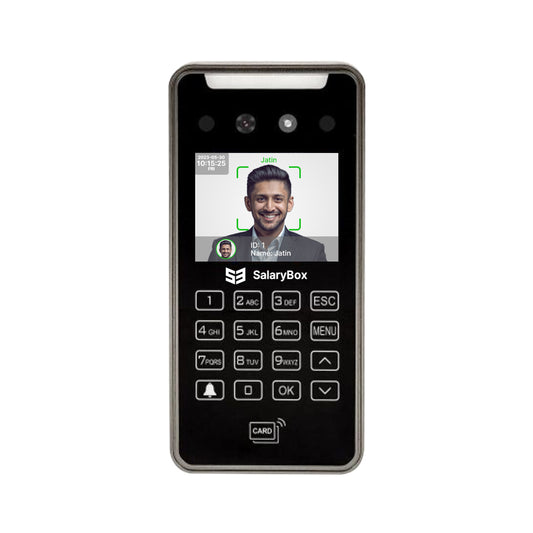
Salarybox Gamma
Salarybox Gamma is an AI-powered facial recognition biometric attendance and access control device with Wi-Fi, touchscreen, and LAN connectivity. It supports up to 1,000 users and features cloud-based software with a mobile app for seamless workforce management.
Pros:
-
Exceptional 99% accuracy with liveness detection, preventing buddy punching.
-
Hybrid capabilities (face + optional fingerprint) for flexibility in varying conditions.
-
Seamless payroll integration via Salarybox app, reducing admin time significantly.
-
Supports mask recognition and works in diverse lighting, making it reliable for real-world offices.
-
Affordable pricing with high scalability for multi-location businesses.
Cons (More Like Considerations):
-
While highly accurate, optimal performance benefits from good frontal positioning, easily achieved with user guidance during enrollment.
-
Capacity suits mid-sized teams perfectly, with easy upgrades for growth.
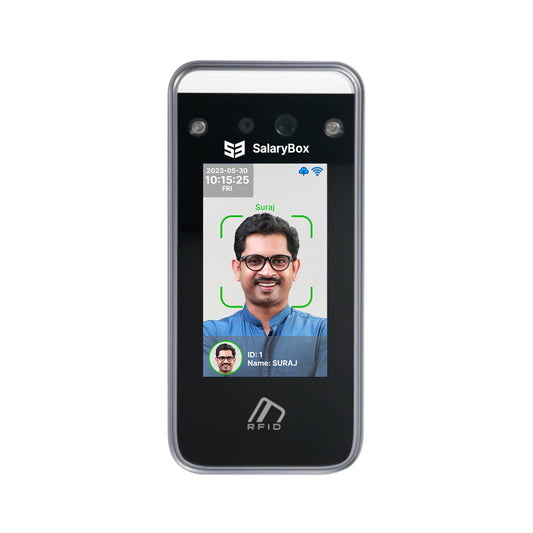
Salarybox Face Scan Pro Device
Face Scan Pro is a dedicated AI face recognition device with inbuilt Wi-Fi, focused on pure touchless operation.
Pros:
-
Advanced AI and liveness detection for top-tier security in touchless mode.
-
Seamless mobile app integration for real-time tracking and geo-fencing.
-
Compact and easy to deploy, ideal for offices prioritizing pure contactless facial recognition.
-
Excellent for hygiene-focused environments, with no touch required.
Cons (More Like Considerations):
-
Focused on face-only for ultimate touchlessness; hybrid options available in Gamma for added versatility.
Both devices excel in post-pandemic digital onboarding and touchless workforce management, with strong encryption for biometric data protection.
Comparing Touchless Biometrics: Pros and Cons
|
Technology |
Pros |
Cons |
|
Facial Recognition (e.g., Salarybox Gamma/Face Scan Pro) |
Fast, convenient, scalable, mask-compatible |
Lighting/angle sensitivity, privacy debates |
|
Iris Scanning |
Highest accuracy, stable lifelong |
User cooperation needed, higher cost |
|
Palm Vein (e.g., Amazon One) |
Internal patterns (hard to spoof), hygienic |
Positioning required, premium pricing |
Facial recognition, especially affordable solutions like Salarybox, balances cost, ease, and performance best for most offices.
The Future of Touchless Biometrics
By 2025-2026, trends point to wider adoption of next-generation biometric software, machine learning biometrics, and IoT touchless devices. Integration with voice control touchless and gesture recognition will further enhance zero UI experiences.
The touchless sensing market continues growing, driven by COVID-19 accelerated technology and demands for hygienic digital interfaces.
FAQs
1. Why switch to touchless biometrics in post-pandemic offices?
Touchless systems reduce infection risks, improve efficiency, and provide secure authentication without physical contact, essential for hygiene in access control.
2. Are touchless biometrics secure?
Yes, with features like liveness detection and encrypted biometric data, they offer high security. Solutions like Salarybox Gamma provide 99% accuracy and anti-spoofing.
3. How do facial recognition systems handle masks or poor lighting?
Advanced devices like Salarybox Gamma and Face Scan Pro support mask recognition and perform reliably in varying conditions.
4. What is the best touchless biometric for offices?
Salarybox biometrics, particularly Gamma and Face Scan Pro, stand out for their affordability, integration with payroll apps, high accuracy, and pure touchless operation, making them ideal for Indian SMEs.
5. Do touchless biometrics raise privacy concerns?
Reputable systems comply with data protection standards. Choose providers with secure biometric templates and transparent policies.
6. Can touchless biometrics integrate with existing systems?
Yes, most modern solutions support easy integration for access control and attendance.
In summary, touchless biometric solutions transform post-pandemic offices into safer, more efficient spaces. For businesses seeking reliable, cost-effective options, Salarybox Gamma and Face Scan Pro emerge as superior choices.