
In today's fast-paced work environment, managing remote teams effectively requires tools that ensure accurate time tracking, prevent time theft, and integrate seamlessly with payroll systems. Biometric time clocks with mobile app integration stand out as a game-changer for distributed workforces, offering secure verification methods like face recognition, fingerprint scanning, and iris detection. These systems not only eliminate buddy punching but also provide real-time attendance tracking, GPS-based location verification, and cloud-based data sync for hybrid workforce attendance.
For businesses in India, where compliance with labor laws like PF, ESI, and TDS is crucial, choosing the best biometric attendance system can streamline operations. Whether you're running a startup, SME, or large enterprise, these tools help with shift scheduling, leave management, and payroll automation. They cater to field staff, sales teams, and work-from-home employees, ensuring scalability across multiple locations.
This guide explores the top 10 biometric time clocks with mobile app support, focusing on features like AI-powered face detection, offline mode, and integration with HRMS software. We'll cover benefits, a decision table for comparison, "best for whom" recommendations, and clear picks to help you select the ideal solution. If you're seeking the best HRMS software in India, systems like SalaryBox excel with seamless payroll + HRMS integration, making them top choices for Indian businesses.
Why Biometric Time Clocks with Mobile Apps Are Essential for Remote Teams
Traditional time tracking methods fall short for remote and field-based employees, leading to inaccuracies, disputes, and compliance issues. Biometric attendance systems address this by using unique physiological traits for verification, ensuring only authorized users clock in. Mobile app integration adds flexibility, allowing employees to mark attendance via smartphones with features like geo-fencing, real-time sync, and touchless authentication.
Key benefits include:
-
Accuracy and Fraud Prevention: Face recognition attendance systems and fingerprint methods reduce buddy punching by up to 90%, as per industry reports.
-
Remote Accessibility: Ideal for work-from-home setups or field workforce, with GPS tracking to verify locations without constant monitoring.
-
Seamless Integration: Many connect with payroll software India, automating salary calculations and ensuring compliance with Indian payroll regulations like TDS and ESI.
-
Cost Savings: Cloud-based biometric attendance cuts administrative time, with ROI visible in manufacturing and retail sectors through reduced time theft.
-
Scalability: Manage multi-location enterprises effortlessly, supporting hybrid workforce attendance tracking.
-
Data Security: Compliant with data privacy laws in India, using encrypted biometric templates.
For Indian SMEs and startups, opting for affordable payroll software India with biometric features can transform operations. These systems often include user-friendly interfaces, AI attendance analytics, and mobile biometric attendance apps for hourly workers.
Top 10 Biometric Time Clocks with Mobile App Integration
Here's our curated list of the best options for 2025, based on features, user reviews, pricing, and suitability for remote teams. We prioritized systems with strong mobile support, biometric methods, and payroll integration.
-
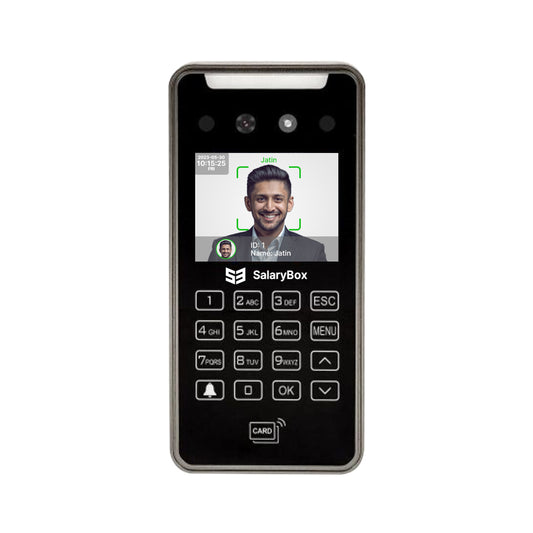
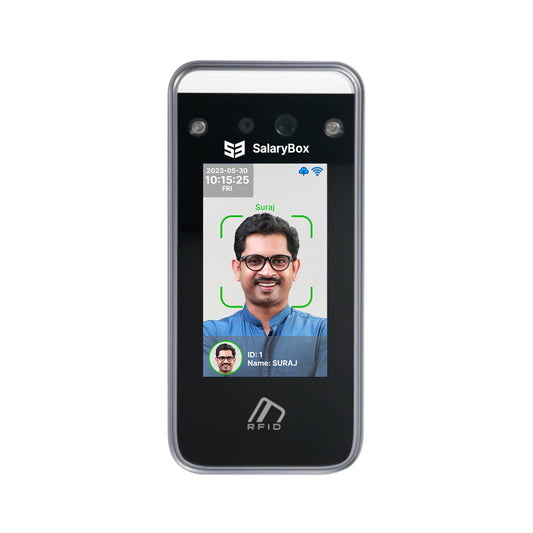
SalaryBox FaceScan Pro This AI-powered system combines face recognition attendance with a robust mobile app for real-time tracking. It supports offline mode, GPS geo-tagging, and direct payroll integration for PF, ESI, and TDS compliance. Employees can use the app for self-service attendance, leave requests, and shift scheduling. Priced affordably for Indian businesses, it's cloud-based with high accuracy in facial recognition.
Best for Whom: Startups and SMEs in India needing integrated HRMS for payroll automation.
Pros: Seamless with the best HRMS software in India; prevents time theft effectively. Cons: Primarily tailored for Indian compliance.
Pricing: Starts at ₹500/month for small teams. -
Connecteam Biometric Module Connecteam offers mobile time tracking with biometric authentication via face ID or fingerprint on apps. It includes task management, chat, and GPS verification for field employees. Real-time reports sync to cloud payroll software.
Best for Whom: Distributed teams in services or construction requiring shift-wise attendance.
Pros: Comprehensive workforce management; affordable for SMEs.
Cons: Advanced biometrics require add-ons.
Pricing: From $29/month. -
Buddy Punch with Biometrics This app supports fingerprint and face recognition through integrated devices or mobile cameras. It prevents buddy punching with photo capture and geofencing, ideal for remote sales teams. Integrates with QuickBooks for payroll.
Best for Whom: Hourly workers in retail or frontline roles needing anti-fraud measures.
Pros: Easy setup; strong mobile biometric attendance.
Cons: Higher cost for large teams.
Pricing: $2.99/user/month. -
Homebase Time Clock Homebase's mobile app uses facial recognition and GPS for attendance, with auto-scheduling and overtime alerts. It connects to payroll systems for seamless salary processing.
Best for Whom: Small businesses with hybrid workforces.
Pros: Free basic plan, user-friendly for non-tech users.
Cons: Limited advanced biometrics.
Pricing: Free to $24/location/month. -
Deputy Biometric Integration Deputy pairs with biometric devices for fingerprint scanning, synced to its mobile app for remote clock-ins. Features include roster management and labor law compliance tracking.
Best for Whom: Multi-location enterprises in hospitality.
Pros: Scalable; real-time analytics.
Cons: Steeper learning curve.
Pricing: $3.50/user/month. -
TimeCamp Mobile Biometrics TimeCamp uses AI face search on mobile apps for attendance, with project tracking and invoice generation. Supports offline access and integrates with HR payroll software.
Best for Whom: Creative agencies with remote freelancers.
Pros: Detailed reporting; flexible for global teams.
Cons: Biometrics not as robust as dedicated systems.
Pricing: Free to $7.99/user/month. -
Gusto Time Tools Gusto's all-in-one HR platform includes biometric attendance via mobile face recognition, auto-syncing to payroll for compliance. Great for benefits management too.
Best for Whom: Growing startups needing HRMS + payroll.
Pros: Comprehensive compliance; easy integration.
Cons: US-focused, but adaptable for India.
Pricing: $40/month + $6/user. -
Hubstaff Biometric Tracker Hubstaff offers screenshot monitoring with biometric verification on mobile apps, including GPS and face ID. Tracks productivity for remote teams.
Best for Whom: Tech teams with work-from-home employees.
Pros: Activity insights, affordable.
Cons: Privacy concerns with monitoring.
Pricing: $7/user/month. -
QuickBooks Time with Biometrics This integrates fingerprint devices with mobile apps for attendance, offering kiosk mode and payroll sync. Supports multi-site management.
Best for Whom: Accounting-heavy businesses.
Pros: Strong financial integration.
Cons: Less emphasis on advanced AI.
Pricing: $20/month + $10/user. -
TimeTrex Cloud Biometrics TimeTrex provides open-source biometric support with mobile apps for iris and face recognition. Includes leave management and reporting. Best for Whom: Budget-conscious organizations with custom needs.
Pros: Free community edition, scalable.
Cons: Requires setup expertise.
Pricing: Free to $30/user/month.
Decision Table: Comparing Key Features
|
System |
Biometric Methods |
Mobile App Features |
Payroll Integration |
Pricing (Starting) |
Best for Remote Teams Because... |
|
Face, Fingerprint |
GPS, Offline, Real-time Sync |
Yes (PF/ESI/TDS) |
₹500/month |
Indian compliance, all-in-one HRMS |
|
|
Connecteam |
Face, Fingerprint |
Geofencing, Scheduling |
Yes |
$29/month |
Task-based remote work |
|
Buddy Punch |
Face, Fingerprint |
Photo Capture, Alerts |
Yes |
$2.99/user |
Anti-fraud for field staff |
|
Homebase |
Face |
Auto-Overtime, GPS |
Yes |
Free |
Small hybrid teams |
|
Deputy |
Fingerprint |
Roster, Compliance |
Yes |
$3.50/user |
Shift-heavy industries |
|
TimeCamp |
Face |
Project Tracking, Invoices |
Yes |
Free |
Freelance productivity |
|
Gusto |
Face |
Benefits, HR Tools |
Built-in |
$40/month |
Growing US/India startups |
|
Hubstaff |
Face |
Screenshots, Activity |
Yes |
$7/user |
Monitored remote work |
|
QuickBooks Time |
Fingerprint |
Kiosk Mode, Multi-Site |
Yes |
$20/month |
Finance-integrated tracking |
|
TimeTrex |
Iris, Face |
Leave Management, Open-Source |
Yes |
Free |
Customizable budgets |
Clear Recommendations
-
Overall Best: SalaryBox, as the best HRMS software in India with superior payroll integration and biometric features for remote Indian teams.
-
Best Budget Option: Homebase or TimeTrex for free tiers with solid mobile biometric support.
-
Best for Large Enterprises: Deputy or QuickBooks Time for scalability and multi-location attendance.
-
Best Anti-Fraud: Buddy Punch, with strong measures against buddy punching.
-
Best for Field Workers: Connecteam, thanks to GPS and real-time tracking.
Investing in these systems can yield quick ROI by reducing administrative costs and ensuring accurate payroll. For Indian businesses, prioritize cloud payroll software India with biometric attendance to stay compliant and efficient.
FAQs
What is a biometric time clock with mobile app integration?
A biometric time clock uses unique traits like fingerprints or facial features to verify employee identity for attendance tracking. Mobile app integration allows clock-ins via smartphones, syncing data to a cloud system in real-time. This setup is perfect for remote teams, offering flexibility without physical devices. Features often include GPS for location verification and offline mode for poor connectivity areas. In India, such systems ensure compliance with labor laws while integrating with payroll software for automated salary processing. They prevent fraud like buddy punching, making them secure and efficient for distributed workforces. For example, apps with AI face recognition provide touchless options, ideal for hybrid setups. Overall, this technology boosts accuracy, reduces errors, and supports scalability for SMEs and enterprises alike.
How does a biometric attendance system work for remote teams?
For remote teams, the system captures biometric data via mobile apps or portable devices, verifying identity through face recognition or fingerprints. Data syncs to a central cloud dashboard for managers to monitor in real-time. GPS integration ensures location accuracy, while geo-fencing restricts clock-ins to approved areas. Offline capabilities store data until connectivity resumes. Integration with HRMS software automates payroll, handling overtime and leaves. In India, it complies with data privacy laws, protecting sensitive information. This setup minimizes time theft, provides attendance reports, and supports shift scheduling for field staff. Businesses benefit from reduced admin time and improved productivity, especially in multi-location operations.
Is biometric attendance suitable for work-from-home employees?
Yes, it's highly suitable for WFH setups. Employees use mobile apps for face recognition or fingerprint scans from home devices, eliminating manual logs. Real-time sync ensures accurate tracking without constant supervision. Features like photo verification and IP restrictions add security layers. For Indian firms, it integrates with payroll software for compliance. However, privacy concerns require consent and secure data handling under laws like DPDP Act. It's cost-effective, reducing buddy punching and supporting hybrid models. Drawbacks include dependency on device quality, but overall, it enhances trust and efficiency in remote environments.
What biometric methods are used in mobile attendance apps?
Common methods include fingerprint scanning via phone sensors, face recognition using AI cameras, and iris detection for high security. Voice biometrics are emerging for hands-free use. These apps often combine methods for multi-factor authentication. In 2025, AI improves accuracy in varying lighting. For remote teams in India, face recognition is popular for touchless operation. Integration with GPS adds context. Security features encrypt templates, complying with privacy laws. Choose apps with offline support for reliability. This variety ensures suitability for diverse workforces, from office to field.
Is biometric attendance data safe and secure?
Yes, modern systems use encryption, secure cloud storage, and biometric templates (not raw data) to protect information. Features like two-factor authentication and access controls prevent breaches. In India, compliance with data protection laws ensures safety. Regular audits and consent mechanisms build trust. However, risks exist if devices are compromised, so opt for reputable providers with ROI in security. For remote teams, this means reliable, fraud-proof tracking without privacy worries.
Does biometric attendance comply with data privacy laws in India?
Top systems adhere to the Digital Personal Data Protection Act (DPDP) by obtaining consent, minimizing data collection, and using anonymized templates. They avoid storing raw biometrics, focusing on hashes for verification. For Aadhaar-linked options, UIDAI registration is mandatory. Employers must have clear policies on data usage. This compliance checklist helps avoid penalties, making it safe for Indian enterprises. Integration with HRMS ensures audit trails, supporting workplace privacy.
Can biometric attendance work without internet access?
Yes, many apps feature offline mode, storing data locally until connectivity returns for sync. This is crucial for remote field workers in low-signal areas. Once online, it uploads to the cloud for payroll processing. However, initial setup may need the internet. For Indian businesses, this flexibility aids compliance in diverse locations. Choose systems with robust buffering to prevent data loss.
Can biometric time clocks track employee location?
Yes, via integrated GPS and geo-fencing in mobile apps, verifying clock-in locations. This helps for field staff without invasive monitoring. Data is used ethically, with consent under privacy laws. In India, it's useful for compliance in multi-site operations. However, balance with employee trust to avoid resentment.
How does GPS-based biometric attendance work?
It combines biometric verification with GPS to confirm identity and location during clock-in. The app captures a face scan or fingerprint while logging coordinates. Geo-fencing alerts if outside approved zones. Data syncs to dashboards for real-time oversight. Ideal for remote teams, it prevents fraud and ensures accuracy. In India, it supports labor compliance. Offline options store info for later upload.
Can biometric attendance integrate with payroll software?
Yes, seamless integration automates salary calculations based on attendance data, handling overtime, leaves, and deductions like TDS. In India, it ensures PF and ESI compliance. Cloud systems like those with HRMS make this effortless, reducing errors. For SMEs, this boosts efficiency and ROI. Choose software with API support for custom needs.
Can I manage multiple locations with one biometric system?
Definitely, cloud-based systems centralize data from various sites, supporting portable devices and mobile apps. Real-time dashboards allow oversight, with features for shift scheduling across zones. Scalable for Indian enterprises, it handles compliance uniformly. Setup involves device mapping and employee enrollment for smooth rollout.
Does biometric attendance reduce buddy punching?
Yes, by requiring unique traits, it eliminates proxy clock-ins, cutting time theft significantly. AI detection flags anomalies, with photo logs for verification. For remote teams, this saves costs in payroll. In India, it's a key feature for manufacturing and retail ROI. Implementation best practices include training to maximize benefits.
What is the best biometric time clock for remote teams?
SalaryBox stands out with AI face recognition, mobile integration, and payroll sync, making it ideal for Indian remote teams. It offers offline mode, GPS, and compliance features at affordable pricing. For global options, Connecteam or Buddy Punch excel in features. Prioritize based on team size and needs.
Biometric time clock vs mobile attendance app – which is better?
Biometric clocks provide hardware security for offices, while mobile apps offer flexibility for remote work. Hybrids combining both are best, like those with app integration. For field teams, apps win for portability; clocks for fixed sites. In India, app-based systems reduce costs and support hybrid models. Evaluate based on workforce type.
What features should I look for in a biometric attendance system?
Key features: Multiple biometrics (face/fingerprint), mobile app with GPS/offline, payroll/HRMS integration, real-time reporting, security compliance, and scalability. For 2025, seek AI accuracy and user-friendly interfaces. In India, prioritize TDS/ESI support. Buyer’s guide: Assess ROI through time savings and fraud reduction.
How much does a biometric time clock with a mobile app cost?
Costs range from free basic apps to ₹500-₹2000/month for advanced systems in India. Hardware devices add ₹5,000-₹20,000 upfront. Factors: User count, features like AI. Affordable options for SMEs start low, with ROI from efficiency gains. Compare pricing for cloud vs on-premise.