
In today's fast-paced business environment, accurate time tracking is essential for maintaining payroll integrity, boosting productivity, and ensuring fair compensation. However, one persistent issue continues to plague many organizations: buddy punching. This form of time theft occurs when an employee clocks in or out for a colleague who is absent, late, or leaving early. While it may seem like a minor favor among coworkers, buddy punching leads to significant financial losses, erodes workplace trust, and complicates compliance efforts.
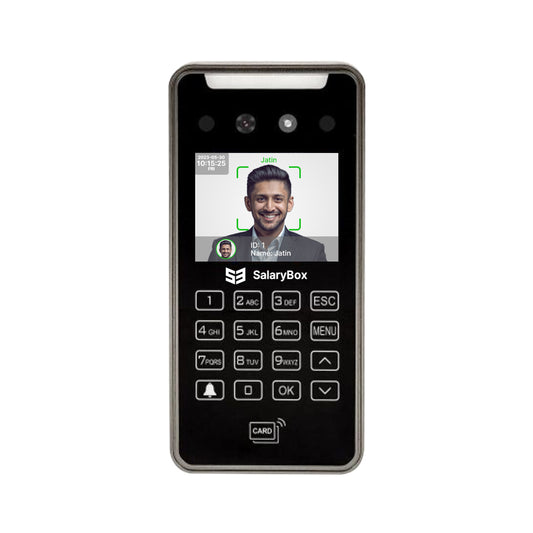
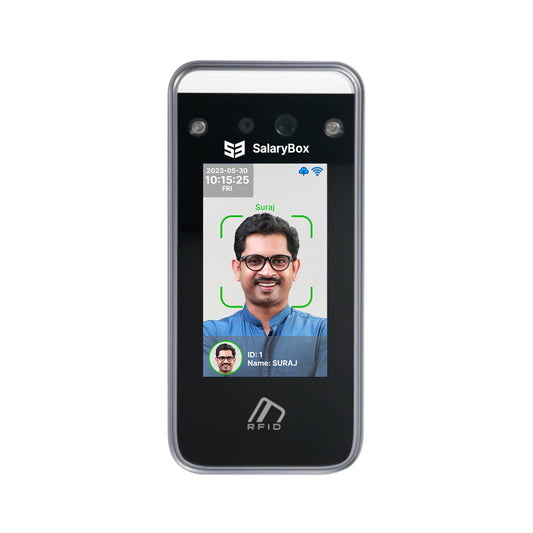
Fortunately, modern technology offers a definitive solution: biometric time clocks. These advanced systems use unique physical characteristics, such as fingerprints or facial features to verify identity, making it virtually impossible for employees to clock in for one another. In this comprehensive guide, we'll explore what buddy punching is, its hidden costs, how biometric time clocks work, their benefits, implementation best practices, and more. By the end, you'll understand why switching to biometric systems can eliminate buddy punching forever.
What Is Buddy Punching and Why Is It a Problem?
Buddy punching, also known as "time clock fraud" or "proxy punching," happens when one employee uses a traditional time clock, such as a punch card, PIN entry, or swipe badge—to record time for another. Common scenarios include:
-
An employee running late asks a coworker to clock them in at the scheduled start time.
-
Someone leaving early has a colleague clock them out later.
-
In extreme cases, an absent employee has a friend cover an entire shift.
This practice is surprisingly common. Studies from the American Payroll Association indicate that 75% of U.S. businesses are affected by time theft, with buddy punching being one of the most prevalent forms. Another survey revealed that up to 16-30% of employees admit to engaging in or witnessing buddy punching.
While employees might view it as harmless, buddy punching is a serious form of payroll fraud. It results in companies paying for hours not worked, inflating labor costs and distorting productivity metrics. Over time, it fosters a culture of dishonesty, lowers morale among honest workers, and can even lead to legal issues under wage and hour laws like the Fair Labor Standards Act (FLSA).
The Hidden Costs of Buddy Punching
The financial impact of buddy punching is staggering. According to various reports:
-
Businesses lose an average of 4.5 hours per employee per week to time theft, equating to about $1,560 per employee annually at minimum wage rates.
-
For small businesses with fewer than 20 employees, this can add up to $30,000 or more per year.
-
Nationwide, buddy punching costs U.S. employers an estimated $373 million to $400 billion annually in lost productivity and inflated payroll.
These figures represent direct costs from overpaid wages. Indirect costs include:
-
Reduced productivity, as absent employees contribute nothing while being paid.
-
Administrative time spent investigating discrepancies.
-
Lower team morale, as honest employees resent those gaming the system.
-
Potential overtime accrual for unworked hours.
-
Compliance risks, including lawsuits for inaccurate payroll records.
In industries with hourly workers, like retail, manufacturing, hospitality, and construction these losses can erode profit margins significantly.
Traditional Time Clocks vs. Biometric Systems: Why Upgrade?
Traditional time tracking methods, paper timesheets, punch cards, PINs, or badge swipes are vulnerable to manipulation. Cards can be shared, PINs forgotten or exchanged, and manual entries easily falsified. These systems also lead to errors, lost cards, and administrative headaches.
Biometric time clocks address these flaws head-on by requiring physical presence for verification. Here's a quick comparison:
|
Aspect |
Traditional Time Clocks |
Biometric Time Clocks |
|
Vulnerability to Buddy Punching |
High (easy to share cards/PINs) |
Virtually None (unique biological traits) |
|
Accuracy |
Prone to errors and fraud |
High (automated and verifiable) |
|
Convenience |
Requires cards, PINs, or manual entry |
Quick scan (1-2 seconds) |
|
Hygiene |
Touch-based (germ spread) |
Options for contactless (facial/iris) |
|
Cost Over Time |
Lower upfront, higher long-term losses |
Higher upfront, significant savings |
|
Security |
Low |
Enhanced (access control integration) |
Biometric systems not only prevent fraud but also streamline operations, reduce payroll processing time, and provide reliable data for decision-making.
How Biometric Time Clocks Work to Prevent Buddy Punching
Biometric time clocks use unique physiological traits to authenticate employees. The process is simple:
-
Enrollment: Employees provide initial scans (e.g., fingerprint or face) to create a digital template stored securely.
-
Clocking In/Out: At shift start/end, the employee scans their trait. The system compares it to the template.
-
Verification: If it matches, the time is recorded. No match? No punch.
Since traits like fingerprints or facial geometry can't be shared or faked easily, buddy punching becomes impossible without the actual person present.
Types of Biometric Time Clocks
Several modalities are available, each suited to different environments:
-
Fingerprint Scanners: Most common and affordable. Scans finger ridges for quick verification. Ideal for offices but may struggle with dirty/wet hands.
-
Facial Recognition: Contactless and hygienic. Analyzes facial features (e.g., eye distance, jaw shape). Great for high-traffic areas or post-pandemic workplaces.
-
Iris/Retinal Scans: Highly accurate, scanning eye patterns. More expensive, used in high-security settings.
-
Palm/Vein Pattern: Scans vein structures under the skin. Resistant to surface damage; contactless options available.
-
Hybrid Systems: Combine multiple methods (e.g., fingerprint + facial) for extra security.
Many modern clocks integrate with cloud software for real-time reporting, payroll export, and remote access.
Key Benefits of Biometric Time Clocks
Adopting biometric systems offers numerous advantages:
-
Complete Elimination of Buddy Punching: Requires physical presence, saving thousands in fraudulent wages.
-
Improved Accuracy: Reduces human errors in manual entry.
-
Enhanced Security: Integrates with access control for restricted areas.
-
Time Savings: Faster clocking reduces lines and admin workload.
-
Better Compliance: Precise records support audits and labor law adherence.
-
Employee Fairness: Promotes accountability, boosting morale among honest workers.
-
Cost Savings Long-Term: ROI through reduced theft and streamlined payroll.
-
Hygiene Options: Contactless models minimize germ spread.
Businesses report payroll accuracy improvements of up to 99% and significant reductions in time theft.
Addressing Privacy Concerns and Legal Considerations
Biometric data is sensitive, raising valid privacy questions. Employees may worry about data misuse or health revelations (e.g., iris changes indicating conditions).
Key concerns:
-
Data breaches (biometrics can't be "changed" like passwords).
-
Potential bias in facial recognition (e.g., accuracy variations by skin tone).
-
Religious objections to facial scans.
Legal landscape: No federal U.S. law mandates specifics, but states like Illinois (BIPA), California (CCPA), Texas, and Washington have strict rules requiring:
-
Written consent.
-
Public data retention/destruction policies.
-
Secure storage.
Violations can lead to hefty fines ($1,000-$5,000 per infraction). Always consult legal experts and prioritize transparency.
Best practices:
-
Obtain informed consent.
-
Use encrypted, minimal-data storage.
-
Offer alternatives for objections.
-
Delete data upon termination.
Best Practices for Implementing Biometric Time Clocks
Successful rollout requires planning:
-
Assess Needs: Evaluate workforce size, industry, and environment (e.g., dirty hands? Opt for facial).
-
Choose the Right System: Look for integration with payroll/HR software, cloud access, and support.
-
Communicate Transparently: Hold meetings explaining benefits (fairness, accuracy) and addressing privacy.
-
Train Thoroughly: Demo enrollment and usage; provide backups (e.g., PIN for failures).
-
Pilot Test: Start with one department to iron out issues.
-
Ensure Compliance: Develop policies, get consents, and secure data.
-
Monitor and Feedback: Gather employee input post-launch for adjustments.
Integration with existing tools amplifies benefits, like automatic overtime calculations.
Real-World Success Stories
Many companies have transformed operations with biometrics:
-
A retail chain reduced time theft by 90%, saving six figures annually.
-
Manufacturing firms report faster shifts and fewer disputes.
-
Hospitality businesses praise contactless facial systems for hygiene.
These systems pay for themselves quickly through savings.
Conclusion: Secure Your Payroll and Boost Efficiency Today
Buddy punching is a costly, preventable problem that undermines trust and profitability. Reliable biometric time clocks offer a permanent solution by ensuring only the right person clocks in. With benefits far outweighing challenges, when implemented thoughtfully, these systems deliver accuracy, security, and peace of mind.
If your business relies on hourly workers, investing in biometrics isn't just smart, it's essential for long-term success. Eliminate buddy punching forever and reclaim control over your payroll.
FAQs
What is buddy punching?
Buddy punching is when one employee clocks in or out for another, allowing payment for unworked hours. It's a common form of time theft affecting 75% of businesses.
How much does buddy punching cost businesses?
It can cost $1,500+ per employee annually, with national losses reaching hundreds of millions. Small businesses may lose $30,000+ yearly.
How do biometric time clocks prevent buddy punching?
They require unique physical traits (e.g., fingerprint or face) for verification, ensuring the employee is physically present.
Are biometric time clocks legal?
Yes in most places, but states like Illinois require consent and policies. Consult local laws to comply.
What types of biometric time clocks are available?
Common types include fingerprint, facial recognition, iris scans, and palm/vein patterns. Facials are popular for being contactless.
Do biometric time clocks raise privacy concerns?
Yes, data security is key. Use encrypted systems, get consent, and follow retention policies to mitigate risks.
How accurate are biometric time clocks?
Very high , 99%+ in most cases, but factors like lighting or dirt can affect some models. Hybrids improve reliability.
What if an employee can't use biometrics (e.g., injury)?
Provide alternatives like PINs or badges to ensure inclusivity and ADA compliance.
How much do biometric time clocks cost?
Devices range from $100-$800+, plus software subscriptions. Long-term savings from reduced theft often yield quick ROI.